


Voltage Regulator


Thread Starter
Mopar Fan
Joined: Sep 2011
Posts: 47
Likes: 5
Voltage Regulator
Before i ask my next question, I am thinking that I should give you folks a little more info concerning the build that I am hoping to complete before winter sets in.
I am currently upgrading my 440 with an MSD Ready-to-Run distributor, coil c/w new wires to a new set of shorty plugs, hiding below new set of Doug's headers. In anticipation of having low vacuum lvls using newly installed Hughes 'Whiplash' cam (awaiting the dreaded break-in ).... I am also installing an electrical vacuum pump c/w the cannister - to hopefully restore decent vacuum numbers. The cooling system has also been upgraded to a HP cross-flow radiator/electric fan setup. All pulleys and brackets have been converted to the Marsh serpentine system with all electronic systems being better supported via new higher output alternator. I've also included a higher stall converter and a new intake/carb combo - primarily for street application.
I have been told, I should also invest in a new Voltage Regulator, although my old one was doing a good job prior to disassembly. Researching my old part, I discovered that it is rated for a "RACE ONLY" application, providing a constant 13.5 volts, compared to production regulators supplying between (11.5-13.5).
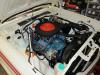
Based on all this info, my question is: Do I replace my regulator with a new 13.5 Volt (Constant) regulator, as is shown in the attached photograph, or based on the questionable street build, do I take this opportunity to revert back to a production style regulator?
I am currently upgrading my 440 with an MSD Ready-to-Run distributor, coil c/w new wires to a new set of shorty plugs, hiding below new set of Doug's headers. In anticipation of having low vacuum lvls using newly installed Hughes 'Whiplash' cam (awaiting the dreaded break-in
).... I am also installing an electrical vacuum pump c/w the cannister - to hopefully restore decent vacuum numbers. The cooling system has also been upgraded to a HP cross-flow radiator/electric fan setup. All pulleys and brackets have been converted to the Marsh serpentine system with all electronic systems being better supported via new higher output alternator. I've also included a higher stall converter and a new intake/carb combo - primarily for street application.I have been told, I should also invest in a new Voltage Regulator, although my old one was doing a good job prior to disassembly. Researching my old part, I discovered that it is rated for a "RACE ONLY" application, providing a constant 13.5 volts, compared to production regulators supplying between (11.5-13.5).
Based on all this info, my question is: Do I replace my regulator with a new 13.5 Volt (Constant) regulator, as is shown in the attached photograph, or based on the questionable street build, do I take this opportunity to revert back to a production style regulator?


Mopar Lover
Joined: Nov 2007
Posts: 2,424
Likes: 248
That blue piece is supposedly "race only" and has been advertised that way for years. I suspect that it's well, "BS" I actually have one and have been intending to run it "just to find out."
Your statement, however on the voltage of production units is incorrect. EVERY production car 12 regulator ever made has a design voltage of "somewhere around" 13.8 --14.2 when warm --- regulators are temperature compensated, with a leeway of (depending on who's books you read of a low about 13.5 and a high about 14.5.
Now LOWER voltage can occur under several conditions--marginal, or old damaged wiring harnesses, undersized or under performing alternator, way too much load for the system (big lights, winch, big fans, etc) and other problems.
But the fact is a PROPERLY operating system is designed for the voltage I posted. This is because of a lead acid battery, plain and simple.
Now MOST production replacement regulators you buy are going to be solid state, even though they LOOK like the old "relay type." Heck you might even HAVE one. Look at the bottom------if it has two great big wirewound resistors, it's the old relay type. If not, it's solid state.
THIS is the old original relay type
http://vintagemoparts.com/img/p/440-1621-large.jpg
THIS is an aftermarket look-alike but solid state...... (no resistors)
http://www.bpeusa.com/images/5310small.jpg
Now if you ever replace the alternator, don't allow someone to sell you the old "roundback" design. Ask for a mid-70's (squareback) which has better low RPM output
The one on the left is the newer, better design. If using a 69 / earlier regulator, just ground one of the two field connectors, and hook up as the old one
http://image.moparmusclemagazine.com...alternator.jpg
If you don't mind "restore look incorrect," you can use the "squareback" with the 70 / later regulator.
Now there ARE "street" versions of the blue regulator
NAPA (Echlin) and Standard "Blue Streak" are VR-1001, VR-128. These look like the blue one, but are sold for "highway use."
Your statement, however on the voltage of production units is incorrect. EVERY production car 12 regulator ever made has a design voltage of "somewhere around" 13.8 --14.2 when warm --- regulators are temperature compensated, with a leeway of (depending on who's books you read of a low about 13.5 and a high about 14.5.
Now LOWER voltage can occur under several conditions--marginal, or old damaged wiring harnesses, undersized or under performing alternator, way too much load for the system (big lights, winch, big fans, etc) and other problems.
But the fact is a PROPERLY operating system is designed for the voltage I posted. This is because of a lead acid battery, plain and simple.
Now MOST production replacement regulators you buy are going to be solid state, even though they LOOK like the old "relay type." Heck you might even HAVE one. Look at the bottom------if it has two great big wirewound resistors, it's the old relay type. If not, it's solid state.
THIS is the old original relay type
http://vintagemoparts.com/img/p/440-1621-large.jpg
THIS is an aftermarket look-alike but solid state...... (no resistors)
http://www.bpeusa.com/images/5310small.jpg
Now if you ever replace the alternator, don't allow someone to sell you the old "roundback" design. Ask for a mid-70's (squareback) which has better low RPM output
The one on the left is the newer, better design. If using a 69 / earlier regulator, just ground one of the two field connectors, and hook up as the old one
http://image.moparmusclemagazine.com...alternator.jpg
If you don't mind "restore look incorrect," you can use the "squareback" with the 70 / later regulator.
Now there ARE "street" versions of the blue regulator
NAPA (Echlin) and Standard "Blue Streak" are VR-1001, VR-128. These look like the blue one, but are sold for "highway use."

Super Moderator
Joined: Sep 2010
Posts: 3,609
Likes: 181
From: Houston, Texas
Other options are one wire alternators or a Nippon Denso alternator that I run on my car. They seem to charge better at lower rpms. When your at idle with the fans and headlights on those older alternators have a hard time keeping the battery charged.
Thread Starter
Mopar Fan
Joined: Sep 2011
Posts: 47
Likes: 5
Thank-you for all the great comments.
I didn't mention it earlier, but I already bought a new square back PowerMaster alternator, that incidentally fits well with the new Marsh Serpentine pulley Sys.
As such, and based upon your comments, I am now thinking I should go with a new duel field regulator and wire up this alternator accordingly, rather than replacing my working (but rusty) post 70's regulator, as seen in posted photo, with yet another one of the same design, then having to ground out one of my field connections on the new alternator to accommodate this older regulator design.
I understand that either method will work, one perhaps being easier than the other, but I don't understand which method would be best to ensure that this alternator is working as intended. I suspect, going with a matching duel field regulator is best.
I also understand, it would be best to upgrade all related wiring within the engine compartment and ignition to #8 red & blacks c/w #12 fusible links, given the alternator upgrade and perhaps even improve upon below noted battery location modification.
My battery has been relocated to the trunk with juice being supplied to and from it via monster cables running forward to the engine compartment, which
to date, has been working extremely well, with no apparent issues.
Am I on the right track with this stuff?
I didn't mention it earlier, but I already bought a new square back PowerMaster alternator, that incidentally fits well with the new Marsh Serpentine pulley Sys.
As such, and based upon your comments, I am now thinking I should go with a new duel field regulator and wire up this alternator accordingly, rather than replacing my working (but rusty) post 70's regulator, as seen in posted photo, with yet another one of the same design, then having to ground out one of my field connections on the new alternator to accommodate this older regulator design.
I understand that either method will work, one perhaps being easier than the other, but I don't understand which method would be best to ensure that this alternator is working as intended. I suspect, going with a matching duel field regulator is best.
I also understand, it would be best to upgrade all related wiring within the engine compartment and ignition to #8 red & blacks c/w #12 fusible links, given the alternator upgrade and perhaps even improve upon below noted battery location modification.
My battery has been relocated to the trunk with juice being supplied to and from it via monster cables running forward to the engine compartment, which
to date, has been working extremely well, with no apparent issues.
Am I on the right track with this stuff?

Thread
Thread Starter
Forum
Replies
Last Post


