


Help with 318 to 440


Thread Starter
Mopar Fan
Joined: Dec 2011
Posts: 26
Likes: 0
Help with 318 to 440
I have a 1965 Dodge Coronet 440. But it has a 318 in it and the valves are rusted through. I have been looking around, and a man has offered me a 1969 440 high performance but its not running.
To get it running he told me that I would have to take it apart, hot tank, decked, bored, cnc at city motors.
It has a hemi 426 crank and its pushing 545hp.
He offered me $1000.
I would like to know what would all have to be done to make it fit and run properly in my Coronet. And if it would be a good deal. If you could help me with anything, that would be great.
Thanks.
To get it running he told me that I would have to take it apart, hot tank, decked, bored, cnc at city motors.
It has a hemi 426 crank and its pushing 545hp.
He offered me $1000.
I would like to know what would all have to be done to make it fit and run properly in my Coronet. And if it would be a good deal. If you could help me with anything, that would be great.
Thanks.
Mopar Fanatic
Joined: Nov 2011
Posts: 122
Likes: 0
From: Great White North

Sounds like a fun project. I'm in the process of tearing down a 440 myself. There must be a reason that he suggested that you tear the engine right down to the block. If there is damage to that crank then it may not be reusable is all I'm wondering. Not that I'm an expert by any means. Maybe you can get some more info first about the history?? Just my two cents. Welcome and good luck!
Joe Welder
Joe Welder
Super Moderator
Joined: Sep 2010
Posts: 3,609
Likes: 181
From: Houston, Texas
First welcome aboard and slow down. I wouldn't pay a thousand bucks for a motor I would have to take apart and do all that to. Look for a 400 buck motorhome or truck 440 from say like 1973. It will have a forged crank and some rods that you will never be able to break. I already saved you 600 bucks. I would say it is going to cost you 2,400 bucks to have all the machine work done and have them assemble it. Then when your ready to put it in the car let me know.  oke:
oke:
oke:
Thread Starter
Mopar Fan
Joined: Dec 2011
Posts: 26
Likes: 0
Thanks for the warm welcoming Bermereric. What would you suggest in these very complicated standards.
It has to be less than $1200.
and I want some bang for my buck.
Its my first car, Im only 16. Please preach it to me.
Thank you.
It has to be less than $1200.
and I want some bang for my buck.
Its my first car, Im only 16. Please preach it to me.
Thank you.
Super Moderator
Joined: Sep 2010
Posts: 3,609
Likes: 181
From: Houston, Texas

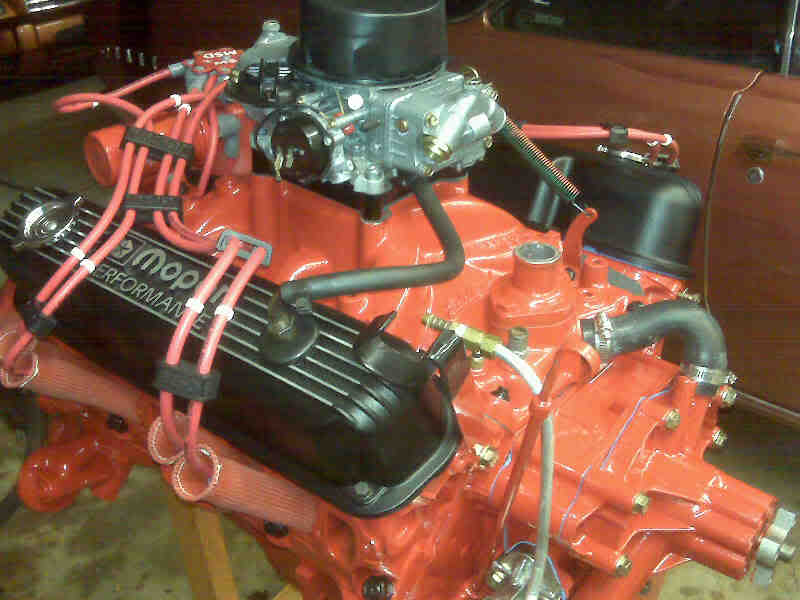
Then I stepped up to a 440 roller motor that costs about 4,500 to build and I did most of the assembly myself.


Mopar Lover
Joined: Apr 2011
Posts: 4,282
Likes: 388
With your $1200 budget ? Find a good running 318 or 360 Clean it up with a mild cam and a 4bbl intake. Other wise plan on spending $2500 ?? (to have someone build it) on that 440 plus an additional $1500 for misc parts. transmission, radiator, motor mounts, drive shaft etc
Admin
Joined: Apr 2008
Posts: 8,173
Likes: 200
From: Goffstown, NH
Welcome!
I'm with TVLynn on this one. Since you already have a 318, I'd stick with another 318 with some performance goodies (intake, carb and headers). If you go to a 360, you'll have to change the torque convertor as the 360 motors are externally balanced and the 318 motors are internally balanced.
If you want to drop in a big block motor, you'll need to swap in a tranny and rear axle as well. Not to mention needing brackets, exhaust work, radiator. (Probably more than what your budget is)
I'm with TVLynn on this one. Since you already have a 318, I'd stick with another 318 with some performance goodies (intake, carb and headers). If you go to a 360, you'll have to change the torque convertor as the 360 motors are externally balanced and the 318 motors are internally balanced.
If you want to drop in a big block motor, you'll need to swap in a tranny and rear axle as well. Not to mention needing brackets, exhaust work, radiator. (Probably more than what your budget is)

Mopar Lover
Joined: Jul 2009
Posts: 4,520
Likes: 117
From: DeLeon Springs, Florida
Welcome to the forum... I'm with TVLynn and 78D200. To stay within your budget you will probable have to stay with the 318. If you do this you can get a running motor and get the car driving and then save the money to go to the Big Block... You will have a lot to change to do that though.... Power costs bucks.... While on here be sure to check out the Mopar of the Month contest....

Mopar Lover
Joined: Apr 2010
Posts: 1,889
Likes: 170
From: Long Island, NY
Chris -
Gonna have to go along with the crowd here. $1000 for a non-running motor is a bit steep. The most economical conversion would be another small block, since you should be able to use most of your existing parts (including the tranny and drive train).
Still, going to a big block has it's advantages, but like B said, get one that's running and starting thinking about the conversion process. A lot of us have done it, but it's never a straight drop in.
Archer
Gonna have to go along with the crowd here. $1000 for a non-running motor is a bit steep. The most economical conversion would be another small block, since you should be able to use most of your existing parts (including the tranny and drive train).
Still, going to a big block has it's advantages, but like B said, get one that's running and starting thinking about the conversion process. A lot of us have done it, but it's never a straight drop in.
Archer


Mopar Lover
Joined: Nov 2007
Posts: 2,424
Likes: 248
Welcome!
I'm with TVLynn on this one. Since you already have a 318, I'd stick with another 318 with some performance goodies (intake, carb and headers). If you go to a 360, you'll have to change the torque convertor as the 360 motors are externally balanced and the 318 motors are internally balanced.
If you want to drop in a big block motor, you'll need to swap in a tranny and rear axle as well. Not to mention needing brackets, exhaust work, radiator. (Probably more than what your budget is)
I'm with TVLynn on this one. Since you already have a 318, I'd stick with another 318 with some performance goodies (intake, carb and headers). If you go to a 360, you'll have to change the torque convertor as the 360 motors are externally balanced and the 318 motors are internally balanced.
If you want to drop in a big block motor, you'll need to swap in a tranny and rear axle as well. Not to mention needing brackets, exhaust work, radiator. (Probably more than what your budget is)
But I agree. Unless you really really want a romper stomper, it would be a lot cheaper to swap a SB in.
Issues, though, I believe you would have the older "small" pilot on the torque converter. You'd have to take care of the "balance problem" if you go 360, but there are aftermarket flex plates available, (B*M) and I believe a simple ring will take care of the converter pilot.
"Hemi crank?" REALLY? As I remember, hemi's used a different crank bolt pattern?? I thought?? So this would mean an oddball there.
Mopar Lover
Joined: Feb 2011
Posts: 1,232
Likes: 80
From: Ridgetop Tenn.
Mopar Lover
Joined: Nov 2007
Posts: 2,424
Likes: 248
Biggest problems I'm aware of swapping from Poly to modern (LA or Magnum) SB is
exhaust of course, much different.
Motor mounts brackets may be different depending on what modern engine you use
balance problems depending .......
and the register for the torque converter is smaller on the old engines, so you need to either have a custom converter made, find/ make a bushing ring for the front pilot, or scrap the old trans and go with a later model trans
I forget, isn't your trans "the oddball year?" That is, the only year that uses a slip yoke instead of the older bolt on U joint, and still a push button?
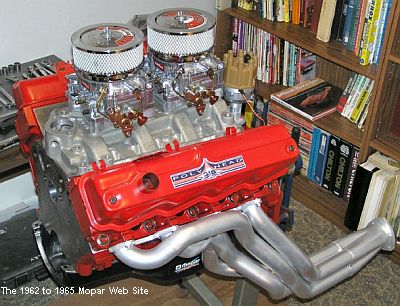
Frankly, I'm rather troubled, here. There is a certain amount of "I'm the rebel" in owning a built Poly car. It DOES take work, but you CAN get some speed parts for Poly engines, and once done, the are truely unique. So you might consider that aspect, too.
I was at Carlsbad, one Sat. night, when a Holley 2 bbl equipped Poly in a 63 went 13-oh



Mopar Lover
Joined: May 2011
Posts: 2,732
Likes: 361
From: Ontario Canada
Welcome Chris. A running 360 is the way I would go. If the seller won't let you do a compression test at least take a vacum gauge, it will give you good information on the engines condition. Today you can take a 360 to great heights a little at a time and it will almost drop right in. Hang on to that Poly and learn about them, they can be built into very powerful engines. Anyone can have a Horsepower engine, but that Poly has a huge WOW factor.
Mopar Lover
Joined: Feb 2011
Posts: 1,232
Likes: 80
From: Ridgetop Tenn.
Yup. Original old Poly. Some people incorrectly call these a "wide block." There is no such thing. IF you were to strip an A (poly) block and an LA block down, you would have difficulty telling them apart. The "wide block" term came from the heads which make the engine look so large.
Biggest problems I'm aware of swapping from Poly to modern (LA or Magnum) SB is
exhaust of course, much different.
Motor mounts brackets may be different depending on what modern engine you use
balance problems depending .......
and the register for the torque converter is smaller on the old engines, so you need to either have a custom converter made, find/ make a bushing ring for the front pilot, or scrap the old trans and go with a later model trans
I forget, isn't your trans "the oddball year?" That is, the only year that uses a slip yoke instead of the older bolt on U joint, and still a push button?
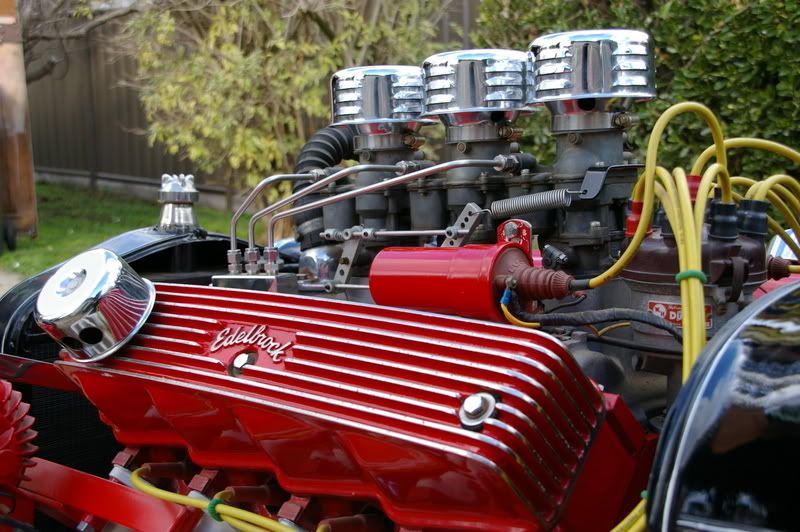
Frankly, I'm rather troubled, here. There is a certain amount of "I'm the rebel" in owning a built Poly car. It DOES take work, but you CAN get some speed parts for Poly engines, and once done, the are truely unique. So you might consider that aspect, too.
I was at Carlsbad, one Sat. night, when a Holley 2 bbl equipped Poly in a 63 went 13-oh
Biggest problems I'm aware of swapping from Poly to modern (LA or Magnum) SB is
exhaust of course, much different.
Motor mounts brackets may be different depending on what modern engine you use
balance problems depending .......
and the register for the torque converter is smaller on the old engines, so you need to either have a custom converter made, find/ make a bushing ring for the front pilot, or scrap the old trans and go with a later model trans
I forget, isn't your trans "the oddball year?" That is, the only year that uses a slip yoke instead of the older bolt on U joint, and still a push button?
Frankly, I'm rather troubled, here. There is a certain amount of "I'm the rebel" in owning a built Poly car. It DOES take work, but you CAN get some speed parts for Poly engines, and once done, the are truely unique. So you might consider that aspect, too.
I was at Carlsbad, one Sat. night, when a Holley 2 bbl equipped Poly in a 63 went 13-oh
I do not see anything wrong as a nick name for a car or an engine
Last edited by rickyr; Dec 29, 2011 at 06:30 AM.
Thread Starter
Mopar Fan
Joined: Dec 2011
Posts: 26
Likes: 0
Thanks for everyones though.
Im still in the need some help though.
Im starting to pull my engine, but also Im going to pull my transmission.
I wondered if there is a best way to get to the motor mounts?
Also, where would I disconnect the transmission?
And I have only found one place where i could bolt down a chain to pull the engine. Its near the front left (if your sitting the in car) of the engine. But I cant find another place. If someone can help me with any of these, that would be great.
Thanks.
Im still in the need some help though.
Im starting to pull my engine, but also Im going to pull my transmission.
I wondered if there is a best way to get to the motor mounts?
Also, where would I disconnect the transmission?
And I have only found one place where i could bolt down a chain to pull the engine. Its near the front left (if your sitting the in car) of the engine. But I cant find another place. If someone can help me with any of these, that would be great.
Thanks.
Mopar Lover
Joined: Nov 2007
Posts: 2,424
Likes: 248
Sounds like you really need to scare up a shop manual. You can download a '66 over at "My Mopar:"
http://www.mymopar.com/index.php?pid=31
scroll down and click on "Service Manuals"
http://www.mymopar.com/index.php?pid=109
I don't remember which one is more complete, I guess the 66 Plymouth. But you still have a push button trans? For that info you'll need an earlier one, so I'd download the 66 Plymouth, the Chrysler, and the 64 Chrysler, all of those. The page numbers on at least one or more of the manuals does not work like original, so you'll have to hunt around in there
For chains, I generally use one corner front, opposite rear corner of engine, but with trans you will need to move back from the front some. You should Google the bar devices that allow you to shift the load point front/ rear, if you are handy you can make one.
Here's one, you could actually make one of these:
http://tools.boxwrench.net/engine-hoist-leveler.htm
For lift points you can just remove an intake manifolt bolt, buy longer bolts and some flat washers and run right through the chain link. If you want to get fancier, fabricate some flat steel strap to bolt to the intake, use your own devices at the chain end.
Several things to unhook underneath--driveshaft, speedometer cable, trans cross member, neutral safety switch, shift linkage and kickdown linkage. Stuff like kickdown---I'd make a drawing if you can't find a drawing in the shop manual, and remove it to prevent damage. And, remove the cooler lines.
AFTER you get the engine / trans unit out of the car, you will want to split them apart. This will be much easier if you do a few things under the car BEFORE you pull them out. Remove the starter, the converter dust shield, and use a 1 1/4" socket so you can turn the engine over. Remove the coverter botls -- 4 -- one at a time from the flex plate. This way, when you split the engine / trans, you won't have to break your fingers getting under there.
If possible, drain engine oil and auto trans. If you don't drain the auto trans, you'll need either a spare driveshaft yoke to plug the rear spline, or take the U joint apart and use that one, or you can buy aftermarket plastic plugs for the rear seal/ rear spline.
Speaking of draining, there's a block coolant plug on each side of the block. Either remove those and drain the block, or use a punch to punch through a lower freeze plug.
I like to remove a lot of stuff from the engine, especially if you are going to tear it down anyhow. Remove at least the alternator, and lower pulley from the crank, the power steering pump if applicable, and certainly A/C pump if it applies. Remove the carb and distributor. If this was an engine that you were going to use as is, plug the holes with rags. Many times, it's easier to remove the exhaust manifolds rather than argue with the incredibly rusted exhaust head pipes.
In any case, whatever you can get off the engine first is weight and bulk that you don't have to argue with on the way out.
http://www.mymopar.com/index.php?pid=31
scroll down and click on "Service Manuals"
http://www.mymopar.com/index.php?pid=109
I don't remember which one is more complete, I guess the 66 Plymouth. But you still have a push button trans? For that info you'll need an earlier one, so I'd download the 66 Plymouth, the Chrysler, and the 64 Chrysler, all of those. The page numbers on at least one or more of the manuals does not work like original, so you'll have to hunt around in there
For chains, I generally use one corner front, opposite rear corner of engine, but with trans you will need to move back from the front some. You should Google the bar devices that allow you to shift the load point front/ rear, if you are handy you can make one.
Here's one, you could actually make one of these:
http://tools.boxwrench.net/engine-hoist-leveler.htm
For lift points you can just remove an intake manifolt bolt, buy longer bolts and some flat washers and run right through the chain link. If you want to get fancier, fabricate some flat steel strap to bolt to the intake, use your own devices at the chain end.
Several things to unhook underneath--driveshaft, speedometer cable, trans cross member, neutral safety switch, shift linkage and kickdown linkage. Stuff like kickdown---I'd make a drawing if you can't find a drawing in the shop manual, and remove it to prevent damage. And, remove the cooler lines.
AFTER you get the engine / trans unit out of the car, you will want to split them apart. This will be much easier if you do a few things under the car BEFORE you pull them out. Remove the starter, the converter dust shield, and use a 1 1/4" socket so you can turn the engine over. Remove the coverter botls -- 4 -- one at a time from the flex plate. This way, when you split the engine / trans, you won't have to break your fingers getting under there.
If possible, drain engine oil and auto trans. If you don't drain the auto trans, you'll need either a spare driveshaft yoke to plug the rear spline, or take the U joint apart and use that one, or you can buy aftermarket plastic plugs for the rear seal/ rear spline.
Speaking of draining, there's a block coolant plug on each side of the block. Either remove those and drain the block, or use a punch to punch through a lower freeze plug.
I like to remove a lot of stuff from the engine, especially if you are going to tear it down anyhow. Remove at least the alternator, and lower pulley from the crank, the power steering pump if applicable, and certainly A/C pump if it applies. Remove the carb and distributor. If this was an engine that you were going to use as is, plug the holes with rags. Many times, it's easier to remove the exhaust manifolds rather than argue with the incredibly rusted exhaust head pipes.
In any case, whatever you can get off the engine first is weight and bulk that you don't have to argue with on the way out.

New Member
Joined: Jan 2022
Posts: 2
Likes: 0
From: Staten Island NY
318 to 440
He said this is a 65. If it has the original 318, it's a Poly, not an LA. This means ANY swap to later B / SB will mean changes in at least the exhaust.
But I agree. Unless you really really want a romper stomper, it would be a lot cheaper to swap a SB in.
Issues, though, I believe you would have the older "small" pilot on the torque converter. You'd have to take care of the "balance problem" if you go 360, but there are aftermarket flex plates available, (B*M) and I believe a simple ring will take care of the converter pilot.
"Hemi crank?" REALLY? As I remember, hemi's used a different crank bolt pattern?? I thought?? So this would mean an oddball there.
But I agree. Unless you really really want a romper stomper, it would be a lot cheaper to swap a SB in.
Issues, though, I believe you would have the older "small" pilot on the torque converter. You'd have to take care of the "balance problem" if you go 360, but there are aftermarket flex plates available, (B*M) and I believe a simple ring will take care of the converter pilot.
"Hemi crank?" REALLY? As I remember, hemi's used a different crank bolt pattern?? I thought?? So this would mean an oddball there.

New Member
Joined: Jan 2022
Posts: 2
Likes: 0
From: Staten Island NY


Thread
Thread Starter
Forum
Replies
Last Post
Mango
General Discussion
10
Oct 27, 2010 06:32 PM


